Claude Science Shows AI Labs Want The Research Workflow
Anthropic's Claude Science beta is less about a new model and more about owning the scientific workflow: data, code, provenance, literature, compute, and review.
Counting reads...
Claude Science Shows AI Labs Want The Research Workflow
Short Summary
Anthropic’s Claude Science beta is a useful signal for where AI products are moving in life sciences. The product is not presented as a new foundation model. It is a specialized research environment built around analysis, scientific databases, code provenance, compute, and reproducibility.
That matters because scientific AI is often limited less by chat quality than by workflow reliability. Researchers need to know which data was used, which code produced a figure, whether citations are traceable, and whether results can be defended months later.
The bigger story is not that AI can suddenly replace wet labs. It is that frontier AI companies are trying to move from general assistants into domain-specific workbenches where the model, tools, data, and audit trail live in one place.
What Happened
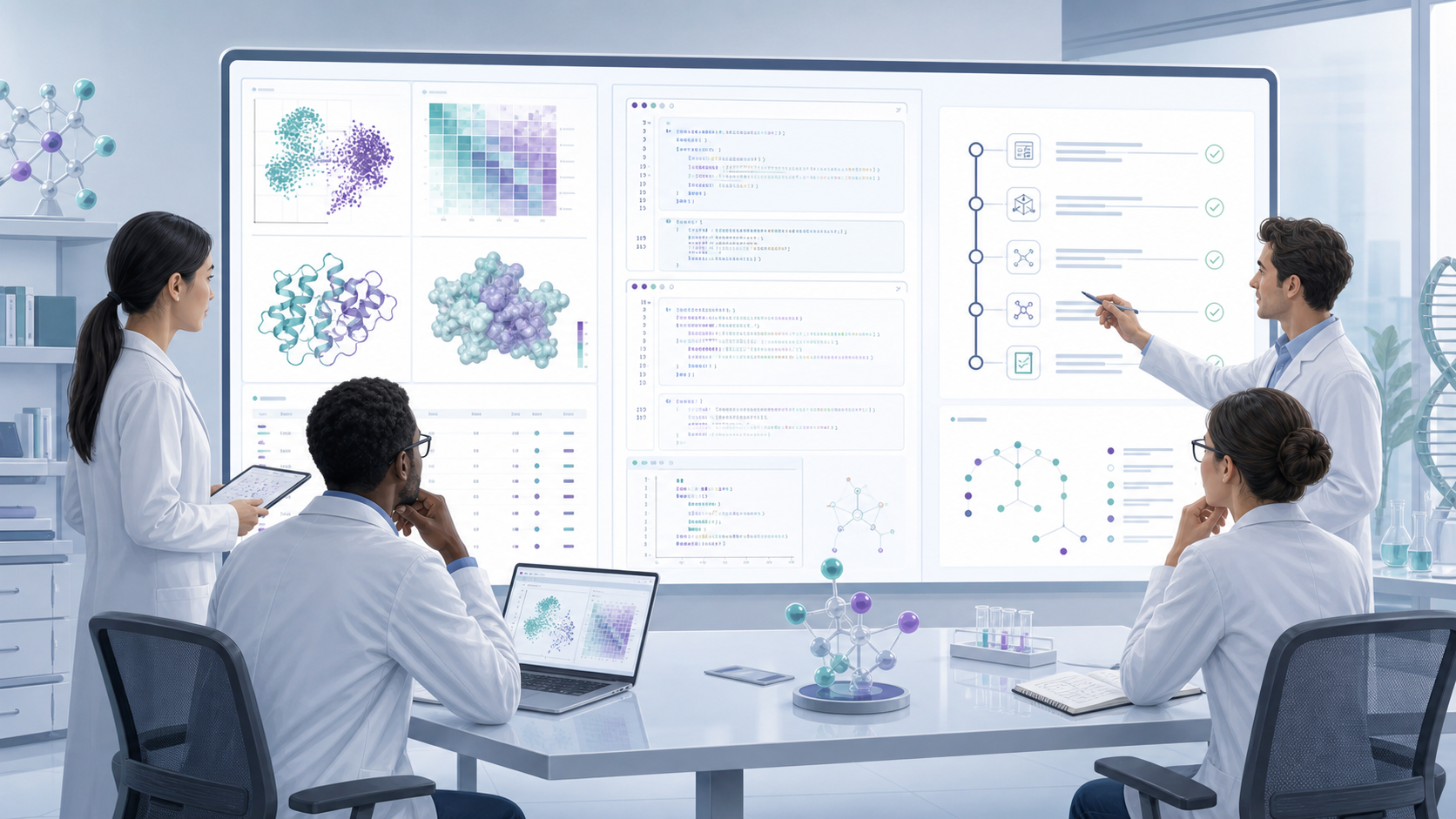
Anthropic has launched Claude Science beta, a dedicated app for scientific research. The official product page says it can run analyses, search databases, trace steps from data wrangling to publication, and work with proteins, genomic tracks, chemical structures, PDFs, Python, R, local machines, clusters, GPUs, and scientific databases.
The Times of India reported on July 1, 2026, that Claude Science is aimed at scientists who need to analyze complex data, manage compute-heavy workflows, and accelerate research. The report also says Anthropic is using the system for internal pre-clinical drug discovery programs, including work on neglected diseases.
The Verge separately reported that Anthropic wants to develop drugs itself, while noting that the details remain limited and that AI-discovered therapies still face a long path through experiments, regulation, and clinical trials.
Why It Matters
Scientific work is not just question answering. It is a chain of decisions: collect data, clean it, choose methods, run code, inspect intermediate results, produce figures, write conclusions, and defend every step.
A general chatbot can help explain a paper or draft a paragraph. A scientific workbench tries to sit inside the whole research process. That is a different product category. It competes less with a search box and more with notebooks, data platforms, electronic lab notebooks, bioinformatics pipelines, HPC job scripts, and internal review processes.
If the product works as advertised, the value is not only speed. The value is traceability: being able to connect a figure back to the code, environment, data, and conversation that produced it.
Key Details
- Claude Science is described as a public beta app, not a new model.
- Anthropic says it can connect to more than 60 scientific databases and domain-specific tools.
- The app is designed for areas such as genomics, single-cell analysis, proteomics, structural biology, and cheminformatics.
- Anthropic emphasizes reproducibility, including histories for figures, tables, notebooks, code, environments, and conversations.
- The product includes scientific renderers for proteins, alignments, genomic tracks, chemical structures, and PDFs.
- News reports say Anthropic is also exploring internal drug discovery work, but public details are still sparse.
Impact For Developers And Enterprises
For AI builders, Claude Science is a reminder that strong models are only part of the product. Domain adoption often depends on integrations, permissions, provenance, evaluation, and trust.
For enterprise teams, the pattern is familiar: a generic assistant becomes more useful when it is wrapped in the specific tools, data stores, file formats, and review gates of a profession. The same idea applies beyond biology: legal review, security operations, finance, quality assurance, and engineering all need domain-specific workflows rather than generic chat.
For research organizations, the most important evaluation question is not whether the AI produces impressive demos. It is whether the system improves the reviewable path from hypothesis to validated evidence.
Risks Or Limitations
There are real limits.
First, scientific claims still need experimental validation. A model can help with literature review, analysis, and hypothesis generation, but it does not remove the need for lab work, clinical evidence, peer review, or regulatory scrutiny.
Second, reproducibility features must be tested in practice. Saving code and conversation history is useful, but teams still need data governance, version control, access controls, and independent review.
Third, life sciences AI carries misuse risks. Tools that improve biological research can also raise safety questions if they make sensitive capabilities easier to access. Anthropic says Claude Science runs on existing models and has gone through its safety evaluations, but customers will still need their own governance.
Final Take
Claude Science is important because it shows how AI labs are trying to move from assistants to operating environments.
The near-term promise is not automated drug discovery on demand. The practical promise is a research workflow where literature, data, code, compute, figures, and review are tied together tightly enough that scientists can move faster without losing the thread of evidence.
That is the right bar for scientific AI: not just fluent answers, but work that can be checked.
Sources
- “Claude Science beta” - https://claude.com/product/claude-science
- “Anthropic launches Claude Science AI research workbench for scientific research” - https://timesofindia.indiatimes.com/technology/tech-news/anthropic-launches-claude-science-ai-research-workbench-for-scientific-research/articleshow/132115850.cms
- “Anthropic wants to develop its own drugs” - https://www.theverge.com/ai-artificial-intelligence/961311/anthropic-claude-science-ai-drug-development