AI Trust Needs Proof, Not Promises
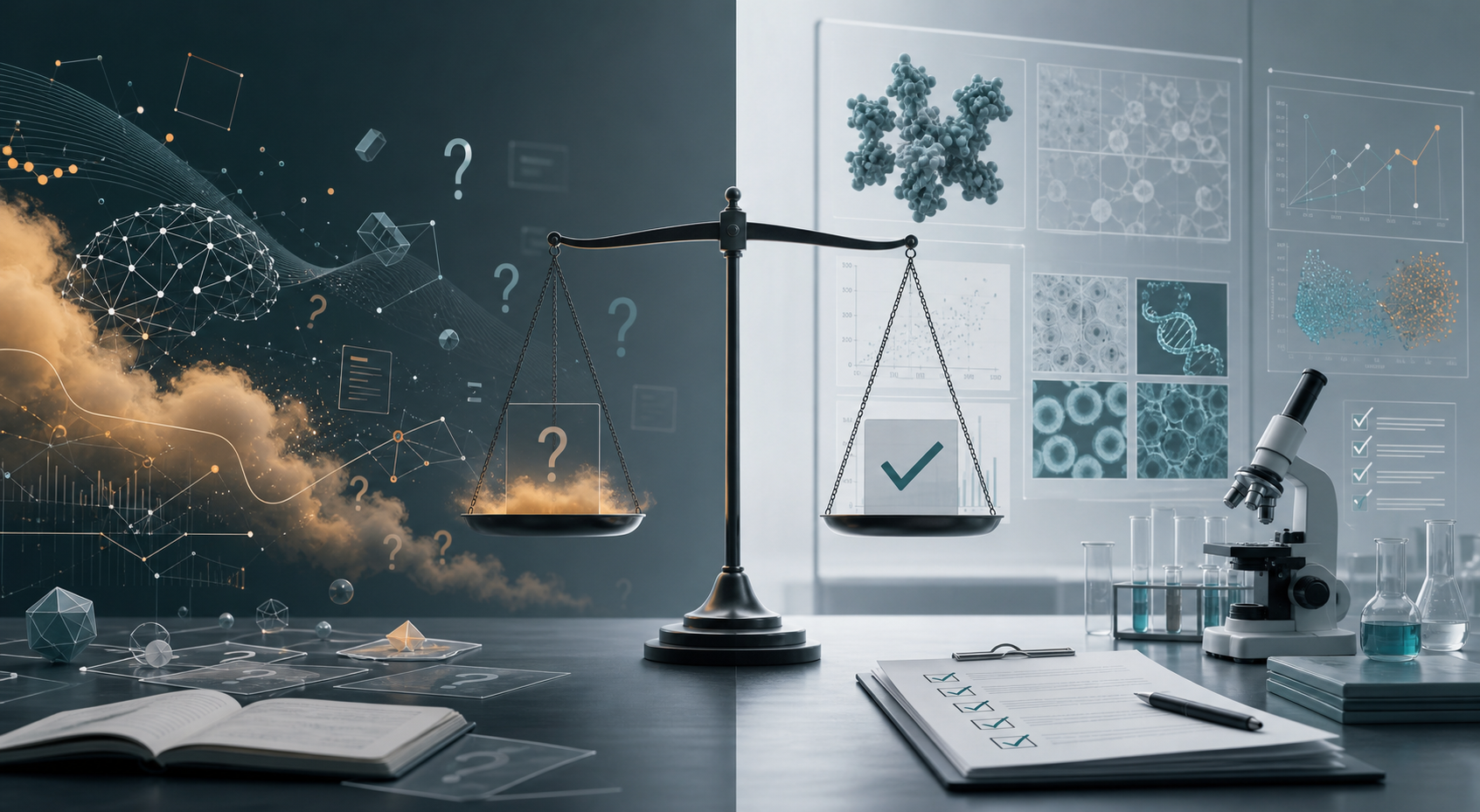
Dario Amodei's latest comments point to a sharper test for AI companies: public trust will depend on measurable scientific progress, accountable deployment, and clearer evidence.
Counting reads...
AI Trust Needs Proof, Not Promises
Short Summary
The AI trust debate is moving from vision statements to evidence.
Business Insider reported on August 16, 2026 that Anthropic CEO Dario Amodei argued the industry will not win over skeptics by repeating big promises. The sharper test is whether AI companies can deliver concrete scientific breakthroughs and show the public how those benefits are validated.
That is not only a communications issue. Anthropic’s own Public Record survey found that Americans put disease cures among their top hopes for AI, while job loss, cognitive dependency, misinformation, and weak accountability remain major fears. Pew Research Center has also found that U.S. adults remain more concerned than excited about AI in daily life.
The practical lesson: AI companies need proof loops, not only product launches.
What Happened
Amodei’s weekend remarks came after months of louder public pressure around AI: data centers, copyright disputes, workplace disruption, frontier safety, and open-model policy. According to Business Insider, he said public distrust will change only when AI companies deliver tangible benefits, especially in science and medicine.
Anthropic has already been collecting public sentiment through the Anthropic Public Record. Its first wave, fielded in late 2025 with nearly 52,000 Americans, showed a split mood. People want AI to help with disease, disability, and scientific progress. They also want accountability, government involvement, and more confidence that companies will not mark their own homework.
OpenAI is making a similar science-and-evidence argument from a different angle. Its July 2026 national science post described work with U.S. National Laboratories, universities, and the Department of Energy’s Genesis Mission to connect frontier models with scientific workflows, evaluations, and expert validation.
The common thread is simple: the promise of AI for science is becoming a trust test.
Why It Matters
Public trust will not be fixed by better slogans. It will depend on whether people can see useful outcomes, credible safeguards, and fair distribution of benefits.
For AI labs, that changes the operating model. A model announcement is not enough. Claims about science, medicine, productivity, or safety need to be tied to repeatable evidence: who tested the system, what it can and cannot do, where humans remain responsible, and what happens when the system fails.
For enterprises, the same pattern applies internally. Employees and customers are more likely to accept AI when the deployment is connected to a real workflow, a measurable result, and a visible accountability path. “AI will transform this” is weak. “This workflow now takes half the review time with no increase in defect escapes, and here is the audit trail” is stronger.
Practical Impact
Teams rolling out AI should treat trust as an engineering and governance problem.
Start with narrow claims. Do not promise broad transformation if the evidence is only from a pilot or benchmark. Define the workflow, the metric, the review process, and the failure mode before scaling.
Measure outcomes that users actually care about: scientific validation, time saved, quality, error rates, safety incidents, customer satisfaction, and human oversight cost. Token prices and benchmark scores matter, but they do not replace evidence that the work improved.
Publish enough of the method to be checked. That can mean model cards, evaluation notes, incident write-ups, customer case studies, audit logs, or third-party review. The right format depends on the risk level, but the principle is the same: trust rises when evidence can be inspected.
Watch Points
- Whether AI labs publish more concrete science results instead of only capability forecasts.
- Whether public-trust programs lead to product or policy changes, not just listening exercises.
- Whether healthcare and science claims are backed by external validation.
- Whether enterprises measure useful workflow outcomes instead of only AI usage.
- Whether regulators focus on claims, accountability, and evidence standards for high-impact AI.
Final Take
The next AI credibility test is not whether companies can describe a future where models cure disease or accelerate science. It is whether they can show verified progress, explain the limits, and make the benefits visible to people outside the lab.
That is a higher bar than hype. It is also the only bar that will matter.
Sources
- “Anthropic CEO Dario Amodei says the way for AI to win over the public is to ‘actually’ cure cancer” - https://www.businessinsider.com/anthropic-ceo-dario-amodei-ai-public-opinion-cure-cancer-2026-8
- “Results from the first Anthropic Public Record” - https://www.anthropic.com/news/anthropic-public-record
- “Inviting hard questions” - https://www.anthropic.com/news/hard-questions
- “Advancing the next era of national science” - https://openai.com/index/advancing-the-next-era-of-national-science/
- “Key findings about how Americans view artificial intelligence” - https://www.pewresearch.org/short-reads/2026/03/12/key-findings-about-how-americans-view-artificial-intelligence/